
The Cultural Significance of Iranian Pottery and Ceramics
Introduction
Iranian pottery and ceramics represent one of the oldest and most influential artistic traditions in the world. For thousands of years, Persian artisans have transformed clay into objects that serve not only practical purposes but also cultural, architectural, and artistic functions. From ancient earthenware vessels discovered at archaeological sites to the intricate turquoise tiles adorning historic mosques, Iranian ceramics tell the story of a civilization deeply connected to craftsmanship, beauty, and innovation.
Today, Iranian pottery and ceramics continue to attract international attention for their unique designs, high-quality craftsmanship, and rich cultural heritage. As global consumers increasingly seek authentic handmade products and culturally meaningful décor, Iranian ceramic products offer significant opportunities in international markets. This article explores the cultural significance, historical development, and export potential of Iranian pottery and ceramics.
A Heritage Dating Back Thousands of Years
The history of pottery in Iran stretches back more than 7,000 years. Archaeological discoveries from ancient settlements such as Sialk, Shahr-e Sukhteh, and other historic sites reveal sophisticated ceramic techniques that existed long before many other civilizations developed similar skills.
Throughout different historical periods—including the Achaemenid, Parthian, Sassanian, and Islamic eras—Persian potters continuously refined their techniques and artistic styles. Their work evolved from simple utilitarian vessels into highly decorative pieces featuring complex geometric patterns, floral motifs, and calligraphic designs.
This long history has established Iran as one of the world’s most important centers of ceramic art and production.
The Artistic Identity of Persian Ceramics
One of the defining characteristics of Iranian pottery and ceramics is the integration of art, symbolism, and functionality. Persian ceramic artists traditionally draw inspiration from:
- Nature and floral patterns
- Persian gardens
- Geometric Islamic designs
- Historical architecture
- Traditional calligraphy
- Mythological and cultural themes
The result is a distinctive artistic language that reflects the values, beliefs, and aesthetics of Persian culture.
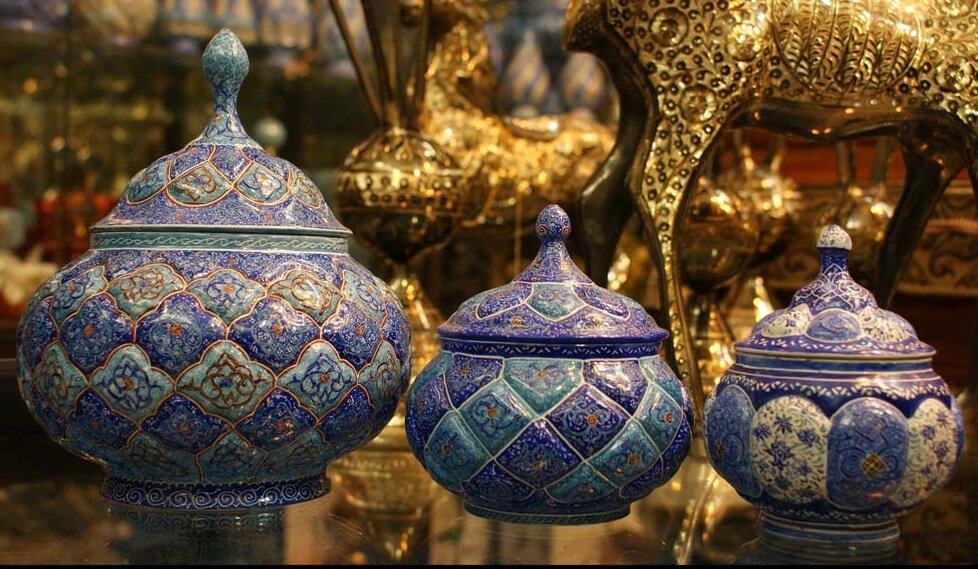
The famous blue and turquoise colors often associated with Iranian ceramics are inspired by the country’s architectural heritage. These colors can be seen in historic landmarks throughout Iran and have become globally recognized symbols of Persian artistic identity.
Regional Centers of Ceramic Production
Several regions across Iran have developed unique ceramic traditions over centuries.
Lalejin: Iran’s Pottery Capital
Often referred to as the pottery capital of Iran, Lalejin is internationally recognized for its handcrafted ceramic products. The city is home to hundreds of workshops producing decorative pottery, tableware, vases, and artistic ceramic pieces.
Isfahan
Known for its rich artistic heritage, Isfahan produces elegant ceramic works that often feature traditional Persian miniature art and intricate hand-painted designs.
Meybod and Yazd
These historic cities are famous for traditional earthenware and decorative ceramics that combine functionality with regional artistic traditions.
Each region contributes unique styles, techniques, and designs that enrich the diversity of Iran’s ceramic industry.
The Role of Ceramics in Persian Architecture
The cultural significance of Iranian ceramics extends far beyond household items. Ceramic tiles have played a central role in Persian architecture for centuries.
Many of Iran’s most iconic monuments feature breathtaking ceramic tilework, including:
- Mosques
- Palaces
- Caravanserais
- Historical schools
- Public squares
These ceramic decorations transformed architecture into a form of artistic expression while preserving cultural and religious symbolism.
The intricate tilework found in cities such as Isfahan, Shiraz, and Yazd continues to inspire architects and designers worldwide. Today, decorative ceramic tiles produced in Iran remain highly valued for residential, commercial, and hospitality projects.
Modern Applications and Global Demand
While rooted in tradition, Iranian pottery and ceramics have successfully adapted to modern market trends. Contemporary manufacturers now produce a wide variety of products, including:
- Decorative home accessories
- Luxury tableware
- Ceramic tiles
- Interior design elements
- Artistic sculptures
- Handmade gift items
Global consumers increasingly appreciate products that combine authenticity, craftsmanship, and cultural value. This trend has created new opportunities for Iranian ceramic producers to access international markets.
Handmade ceramics, in particular, are experiencing strong demand among buyers seeking sustainable, artisanal, and culturally distinctive products.
Export Opportunities for Iranian Pottery and Ceramics
The international market for handcrafted and decorative products continues to grow. Iranian ceramics possess several competitive advantages that support export development.
Rich Cultural Heritage
Products with authentic cultural backgrounds often command premium prices in global markets. Iranian ceramics offer centuries of artistic tradition that distinguish them from mass-produced alternatives.
Skilled Craftsmanship
Many Iranian ceramic products are handmade by experienced artisans whose techniques have been passed down through generations.
Competitive Pricing
Compared to many European handcrafted ceramic products, Iranian ceramics often provide excellent quality at competitive prices.
Diverse Product Range
Iranian producers can supply both traditional artistic pieces and modern ceramic products suitable for contemporary interiors.
Key export destinations include:
- Gulf Cooperation Council (GCC) countries
- Europe
- Central Asia
- East Asia
- North America
- International tourism and gift markets
Sustainability and the Value of Handmade Products
Modern consumers are increasingly interested in sustainable and ethically produced goods. Handmade pottery and ceramics align well with these preferences.
Many Iranian ceramic workshops use traditional production methods that emphasize:
- Local materials
- Small-batch production
- Artisan craftsmanship
- Long-lasting product quality
These characteristics appeal to environmentally conscious consumers seeking alternatives to mass-produced household goods.
Future Prospects for the Industry
The future of Iran’s pottery and ceramics industry is promising. Growing global appreciation for cultural products, handcrafted décor, and authentic design creates favorable conditions for expansion.
By investing in:
- International branding
- E-commerce platforms
- Modern packaging
- Participation in international exhibitions
- Digital marketing strategies
Iranian ceramic producers can significantly strengthen their presence in global markets.
The combination of ancient craftsmanship and modern business practices offers substantial opportunities for export growth.
Conclusion
Iranian pottery and ceramics are far more than decorative objects—they are a reflection of thousands of years of cultural heritage, artistic excellence, and craftsmanship. From ancient Persian civilizations to modern international markets, ceramics have remained an essential part of Iran’s cultural identity.
As global demand for authentic handmade products continues to rise, Iranian pottery and ceramics are uniquely positioned to capture new opportunities. With their distinctive designs, rich history, skilled craftsmanship, and export potential, these products serve as cultural ambassadors that connect Persian heritage with homes, businesses, and collectors around the world.
