
How Silk Shaped Trade Routes Across Persia
How Silk Shaped Trade Routes Across Persia
Introduction
For centuries, silk was more than a luxurious fabric—it was one of the world’s most influential trade commodities. Long before the age of modern shipping and global logistics, silk connected civilizations, fueled economic growth, and helped establish some of history’s most important trade networks. At the heart of this exchange stood Persia, a strategic crossroads linking East and West.
Thanks to its geographic position, Persia played a vital role in the movement of silk between China, Central Asia, the Middle East, and Europe. Merchants, travelers, scholars, and diplomats crossed Persian territories carrying not only valuable goods but also ideas, technologies, and cultural traditions. The history of silk trade in Persia is therefore not just a story of commerce; it is a story of cultural exchange, economic development, and global connectivity.
This article explores how silk shaped trade routes across Persia and how its legacy continues to influence modern perceptions of Persian textiles and international trade.
The Origins of the Silk Trade
Silk production is believed to have originated in ancient China thousands of years ago. Highly valued for its softness, durability, and beauty, silk quickly became one of the most sought-after luxury goods in the ancient world.
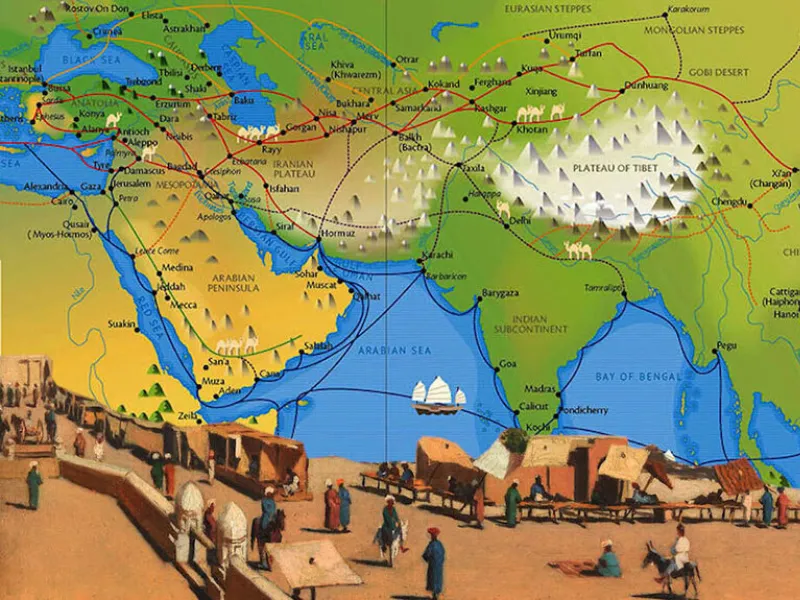
As demand for silk expanded beyond East Asia, merchants developed extensive trade networks to transport the precious fabric across vast distances. These routes eventually became known as the Silk Road, a network of land and maritime pathways connecting Asia, the Middle East, Africa, and Europe.
Because Persia occupied a central geographic position within these networks, it became one of the most important hubs for international trade.
Persia: The Gateway Between East and West
Few regions were as strategically positioned as Persia during the era of Silk Road commerce.
Persia connected:
- China and East Asia
- Central Asia
- The Indian subcontinent
- The Arabian Peninsula
- Anatolia
- Europe
Caravans traveling across these regions often passed through Persian cities, where goods were exchanged, taxed, stored, and redistributed.
This position transformed Persia into a major commercial center and helped establish thriving urban markets throughout the region.
The movement of silk through Persian territory generated wealth and supported the development of sophisticated trading infrastructure.
Major Persian Trade Centers Along the Silk Road
Several Persian cities became important commercial hubs due to their location on major trade routes.
Among the most prominent were:
Tabriz
Located near important routes linking Anatolia, the Caucasus, and Central Asia, Tabriz became a major center for textile trade and international commerce.
Rey
Situated near modern Tehran, Rey served as an important crossroads connecting eastern and western trade networks.
Isfahan
Known for its architecture, craftsmanship, and commercial activity, Isfahan later became one of the most influential economic centers in Persian history.
Nishapur
Positioned along key caravan routes, Nishapur played a vital role in facilitating trade between Central Asia and the Persian heartland.
These cities provided merchants with markets, caravanserais, storage facilities, financial services, and protection for valuable goods.
Silk as an Economic Driver
Silk was one of the most profitable commodities traded through Persia.
Its value stemmed from several factors:
- Labor-intensive production
- Limited availability
- High demand among elites
- Exceptional quality
- Long-distance transport costs
The trade of silk generated income through:
- Commercial transactions
- Customs duties
- Transportation services
- Textile production
- Artisan industries
As silk commerce expanded, it stimulated broader economic activity throughout Persian territories.
The prosperity generated by trade helped support urban growth, infrastructure development, and cultural achievements.
The Growth of Persian Silk Production
While Persia initially served primarily as a transit route for Chinese silk, local silk production gradually became an important industry in its own right.
Several regions developed expertise in:
- Sericulture (silk farming)
- Silk weaving
- Textile dyeing
- Luxury fabric production
Persian artisans combined imported techniques with local craftsmanship to create distinctive silk products admired throughout international markets.
These textiles became known for their:
- Intricate designs
- Rich colors
- Fine workmanship
- Cultural symbolism
Persian silk fabrics were exported to neighboring regions and contributed significantly to the reputation of Persian textile craftsmanship.
Cultural Exchange Through Silk Trade
The Silk Road was far more than a commercial network.
As merchants traveled through Persia, they carried:
- Languages
- Religious ideas
- Scientific knowledge
- Artistic traditions
- Technological innovations
Persia became a meeting point for diverse cultures from East and West.
This exchange influenced:
- Architecture
- Literature
- Art
- Fashion
- Science
The movement of silk often accompanied the movement of ideas, making Persia a major center of cultural interaction and intellectual development.
Many of the cultural influences visible in Persian art and design today can be traced to these centuries of international exchange.
Silk and the Development of Persian Textile Traditions
The historical importance of silk helped shape Persia’s broader textile heritage.
Over time, Persian weavers developed world-renowned expertise in producing:
- Silk fabrics
- Decorative textiles
- Luxury garments
- Carpet foundations
- Embroidered products
The skills developed through centuries of silk production contributed to the evolution of some of the most celebrated textile traditions in the world.
Today, many traditional Persian fabrics continue to reflect the artistic legacy established during the Silk Road era.
The Legacy of the Silk Road in Modern Trade
Although modern transportation has replaced ancient caravan routes, the historical role of Persia as a trade corridor continues to influence regional commerce.
Contemporary trade networks still benefit from many of the same geographic advantages that made Persia important centuries ago.
Modern infrastructure projects, logistics corridors, and international transportation routes often follow pathways similar to historical trade connections.
The story of silk trade also highlights the enduring importance of connectivity, market access, and cross-cultural cooperation in global commerce.
Why the Story of Silk Still Matters Today
Interest in authentic, heritage-rich products continues to grow among global consumers.
Traditional silk textiles and textile-inspired products are valued for their:
- Historical significance
- Artisanal craftsmanship
- Cultural authenticity
- Premium quality
For businesses involved in textiles, fashion, handicrafts, and cultural products, the history of silk provides a powerful narrative that connects modern markets with centuries of craftsmanship and trade.
This historical connection adds value to products that embody traditional techniques and cultural heritage.
Conclusion
Silk played a transformative role in shaping trade routes across Persia, helping establish the region as one of history’s most important commercial and cultural crossroads. By connecting East and West, silk commerce stimulated economic growth, encouraged cultural exchange, and supported the development of renowned textile traditions that continue to influence global markets today.
From the bustling caravan cities of the Silk Road to modern international trade networks, the legacy of silk remains deeply intertwined with Persia’s history. Its story serves as a reminder of how a single commodity can shape economies, connect civilizations, and leave a lasting impact on global commerce for generations.
