
Kitchen Technologies That Changed Modern Living
Kitchen Technologies That Changed Modern Living
Introduction
The kitchen has always been the heart of the home, but over the last century, technological innovation has transformed it from a labor-intensive workspace into a highly efficient, connected, and intelligent environment. Advances in kitchen technology have changed the way people prepare food, store ingredients, clean dishes, and manage their daily routines. What once required hours of manual effort can now often be completed with the touch of a button.
From refrigeration and microwave cooking to smart appliances and connected kitchen ecosystems, technological developments have improved convenience, food safety, energy efficiency, and overall quality of life. As consumer expectations continue to evolve, kitchen innovation remains one of the most dynamic segments of the household appliance industry. This article explores the key kitchen technologies that have changed modern living and continue to shape the future of homes worldwide.
Refrigeration: Revolutionizing Food Storage
One of the most important breakthroughs in kitchen history was the introduction of the electric refrigerator.
Before refrigeration became common, households relied on:
- Iceboxes
- Root cellars
- Salting and drying methods
- Frequent food purchases
Modern refrigerators transformed food preservation by allowing families to store fresh ingredients for longer periods while reducing spoilage and food waste.
Benefits of refrigeration include:
- Improved food safety
- Greater convenience
- Reduced shopping frequency
- Expanded food variety
Today’s refrigerators incorporate advanced cooling systems, humidity controls, and energy-efficient technologies, making them essential components of modern kitchens.
Electric and Gas Cooking Appliances
The development of electric and gas stoves dramatically changed food preparation.
Compared to traditional wood- or coal-fired cooking methods, modern stoves offered:
- Better temperature control
- Faster cooking times
- Increased safety
- Improved cleanliness
These innovations enabled more consistent cooking results and made meal preparation easier for households around the world.
Over time, ovens and cooktops evolved to include programmable settings, convection technology, and precision temperature controls that further enhanced cooking performance.
The Microwave Oven: A New Era of Convenience
Few kitchen technologies have had as significant an impact on convenience as the microwave oven.
Introduced to consumer markets in the second half of the twentieth century, microwave technology revolutionized food preparation by dramatically reducing cooking and reheating times.
Key advantages include:
- Rapid meal preparation
- Efficient reheating
- Energy savings
- Convenience for busy lifestyles
Microwave ovens quickly became a standard feature in homes, offices, restaurants, and commercial kitchens.
Their popularity reflects growing consumer demand for speed and efficiency in everyday cooking.
Dishwashers and Automated Cleaning
Cleaning dishes was traditionally one of the most time-consuming household tasks.
The widespread adoption of dishwashers transformed kitchen management by:
- Reducing manual labor
- Saving time
- Improving hygiene
- Enhancing water efficiency
Modern dishwashers utilize advanced sensors and optimized cleaning cycles to deliver effective performance while minimizing resource consumption.
As households increasingly prioritize convenience, automated cleaning technologies continue to play a central role in modern kitchens.
Food Processors and Small Kitchen Appliances
The rise of compact kitchen appliances introduced new levels of efficiency and versatility.
Popular innovations include:
- Food processors
- Blenders
- Mixers
- Coffee machines
- Air fryers
- Juicers
These devices simplify food preparation tasks such as chopping, mixing, grinding, and blending.
By reducing preparation time and increasing consistency, small appliances have become indispensable tools for both home cooks and culinary professionals.
Their continued evolution reflects consumer interest in convenience, health-conscious cooking, and personalized food experiences.
Smart Refrigerators and Connected Appliances
The emergence of the Internet of Things (IoT) has introduced a new generation of intelligent kitchen appliances.
Smart refrigerators can now:
- Monitor food inventory
- Track expiration dates
- Display shopping lists
- Connect with mobile applications
- Optimize energy consumption
Similarly, connected ovens, coffee makers, and dishwashers allow users to monitor and control appliances remotely through smartphones and smart home platforms.
These technologies help streamline household management and improve overall user convenience.
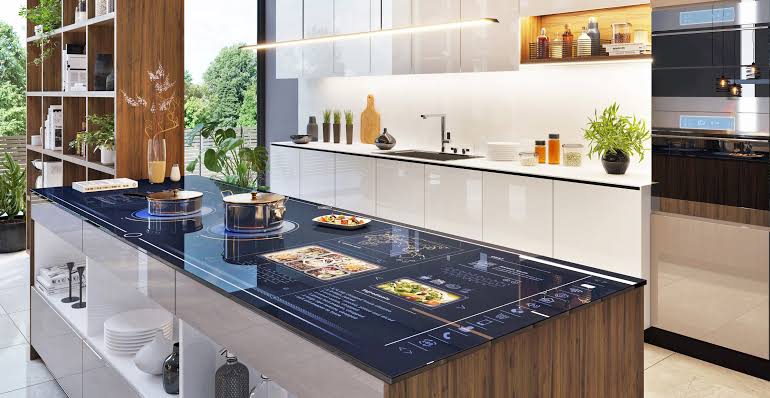
Induction Cooking Technology
Induction cooktops represent one of the most significant advancements in modern cooking technology.
Unlike traditional gas or electric burners, induction systems use electromagnetic energy to heat cookware directly.
Benefits include:
- Faster heating
- Greater energy efficiency
- Precise temperature control
- Enhanced safety
- Easier cleaning
As consumers become increasingly focused on sustainability and efficiency, induction cooking continues to gain popularity in residential and commercial kitchens alike.
Artificial Intelligence in the Kitchen
Artificial intelligence is beginning to transform how people interact with kitchen appliances.
AI-powered technologies can:
- Recommend recipes
- Optimize cooking settings
- Monitor food quality
- Learn user preferences
- Improve appliance efficiency
For example, smart ovens can automatically adjust cooking times and temperatures based on the type of food being prepared.
These innovations are helping create more personalized, efficient, and user-friendly kitchen experiences.
As AI capabilities continue to advance, intelligent kitchen systems are expected to become increasingly sophisticated.
Sustainability and Energy-Efficient Kitchen Design
Environmental concerns have become an important factor influencing kitchen technology development.
Manufacturers are focusing on:
- Energy-efficient appliances
- Water-saving technologies
- Eco-friendly materials
- Waste reduction systems
- Sustainable manufacturing processes
Modern refrigerators, dishwashers, and cooking appliances consume significantly less energy and water than earlier generations.
This shift supports both environmental goals and consumer demand for lower operating costs.
Sustainability is likely to remain a major driver of innovation across the kitchen appliance industry.
The Rise of Smart Kitchen Ecosystems
The future of kitchen technology extends beyond individual appliances.
Increasingly, manufacturers are developing integrated ecosystems where appliances communicate with one another and work together seamlessly.
Examples include:
- Smart meal planning
- Automated grocery management
- Voice-controlled cooking
- Integrated home assistants
- Predictive maintenance systems
These interconnected solutions aim to simplify daily tasks and create more efficient home environments.
As smart home adoption expands globally, fully connected kitchens are expected to become more common.
Future Trends in Kitchen Technology
Several emerging trends are expected to shape the next generation of kitchen innovation:
- AI-powered cooking assistants
- Advanced food preservation systems
- Robotics in food preparation
- Smart energy management
- Personalized nutrition technologies
- Enhanced automation
These developments will continue to redefine how people interact with food, appliances, and household technology.
The kitchen of the future is likely to be more intelligent, sustainable, and connected than ever before.
Conclusion
Kitchen technologies have played a transformative role in modern living by improving convenience, efficiency, food safety, and household productivity. From the invention of refrigeration and microwave cooking to the emergence of smart appliances and artificial intelligence, innovation has continuously reshaped the way people prepare meals and manage their homes.
As technology continues to evolve, kitchens are becoming increasingly connected, intelligent, and sustainable. The ongoing development of advanced appliances and integrated smart ecosystems ensures that kitchen innovation will remain a driving force in improving everyday life for households around the world.
